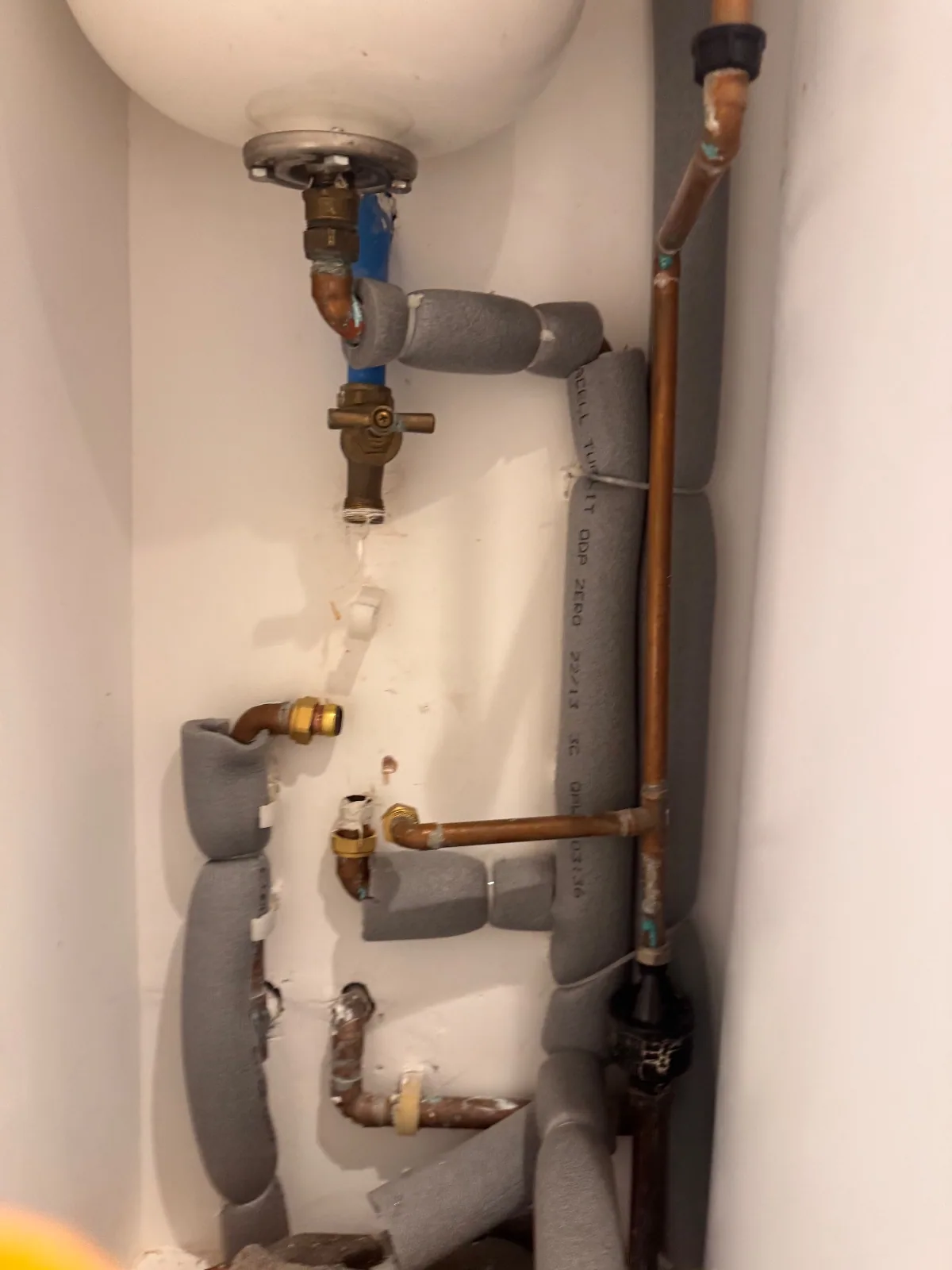
The replacement work we handle
A replacement can retain the existing system type or form part of a larger hot water upgrade. We identify which option suits the fault, demand and available space, then define the associated pipework and controls rather than quoting for the vessel alone.
- Like-for-like cylinder exchange: replace a failed or deteriorated vessel while checking the retained supply, heat source and controls.
- Capacity or layout change: assess peak use, recovery and cupboard access when the old arrangement no longer meets demand.
- Vented cylinder replacement: assess the storage-fed arrangement, connections and available installation space.
- Unvented cylinder replacement: assess the mains supply, expansion and safety controls, discharge route and required electrical work.
- Vented-to-unvented conversion: plan the wider supply and control changes as an installation project, including what redundant equipment is removed.
- Brand-specific projects: discuss Megaflo and Mixergy options through the relevant installation pages, with compatibility checked for the selected model.
Confirm the fault before replacing the vessel
Water in a cylinder cupboard can originate from a connection, nearby pipework or a safety discharge. A failed immersion or control can also leave a sound cylinder cold. We locate the problem so the repair or replacement addresses the cause.
If the vessel has failed, the next step is to select and plan its replacement. Where an attached component is repairable, we explain that option. A larger project may still make sense if the existing system is undersized or being changed for a refurbishment, but that is a separate decision from repairing a local fault.
Match storage and recovery to the property
We discuss the number and type of outlets, consecutive showers, baths and simultaneous use. We also assess the heat source and how quickly the stored water can recover between uses. The proposed capacity should reflect that pattern rather than simply repeating the volume on the old label.
A direct cylinder uses immersion heating; an indirect cylinder receives heat from a separate source through a coil or specified heat-exchange arrangement. A standard combi usually heats water on demand without a separate cylinder. If a future heating change is planned, include it in the brief so model selection accounts for compatibility.
Plan the cupboard, removal route and connections
The survey considers the full installed arrangement: cylinder dimensions, connections, service clearances, surrounding valves and safe access. We also check the route out for the old unit and in for its replacement, including doors, stairs and restrictions in communal areas.
A new position can change pipe routes and the work needed to floors, walls or cupboards. For unvented systems, the discharge arrangement is part of choosing that position. We agree any opening and making-good scope before the installation, along with work that needs another trade or the building manager’s approval.
Replacement day: remove, install and commission
We plan the hot water interruption around the agreed work and the needs of the occupied property. The replacement involves appropriate isolation and draining, removal of the old cylinder, positioning the new unit and completing the specified pipework, controls and electrical connections.
The complete installation is then commissioned according to its model and system requirements. The handover explains ordinary controls, maintenance and the relevant installation records. Where the project includes a conversion, the plan also identifies the old storage equipment or connections being removed and the services retained.
Unvented safety and installation responsibilities
Unvented cylinders depend on suitable pressure and temperature protection and a correctly arranged discharge route. The work requires appropriate unvented competence, with the applicable building-control process addressed as part of installation. Gas work and electrical work each need their relevant competence; one qualification does not cover every task.
If the existing system is steaming or discharging unusually hot water, keep clear and seek urgent assistance. Switch off the heat source only using normal controls safely accessible from a dry place. Do not turn off the water supply as a generic response to overheating, obstruct discharge or manipulate cylinder safety devices.
What your replacement proposal covers
The proposal identifies the cylinder type and capacity, connections and controls to be changed, removal of the old unit and commissioning. Additional electrical work, access openings and making good are identified so the scope matches the property. Changes revealed after access are discussed before the work is extended.
Product warranty and service conditions depend on the selected model and installation. Keep the model details, commissioning information and applicable compliance records together. We explain the maintenance needed and the route for reporting problems such as unexpected discharge after installation.
Arrange a cylinder replacement assessment
Loyal Plumbers has 10 active vans and operates 24/7 across all London boroughs and inside the M25. Send your postcode, cylinder details, symptoms and any planned changes to bathrooms or occupancy. Let us know whether there is an active leak or whether this is a planned upgrade.
For managed premises, include the person approving the work, the keyholder and access rules. Tell us if the cylinder is the only hot water source or if vulnerable occupants need arrangements during the changeover.
Send written details through the enquiry form. We can arrange to receive photographs or documents by email afterwards; the form does not accept uploads.
Common questions
Can the boiler stay when the cylinder is replaced?
Yes, where its condition and the new cylinder’s heating arrangement are compatible. We check that relationship during the survey rather than automatically including a boiler replacement.
Does replacing a cylinder improve shower flow?
It can address the storage arrangement, but flow also depends on the available supply and distribution. We assess weak flow separately from insufficient hot water volume.
Can you replace a Megaflo or fit a Mixergy cylinder?
We assess those brand-specific projects as part of cylinder installation. The model, heating source, controls and access need checking before selection.
What affects the replacement cost?
Cylinder specification, capacity, supply and control changes, discharge work, electrical connections and removal access. A conversion or relocation generally has a different scope from a same-position exchange.
Sources and further reading
Choose the work you need
Useful guides for this service
Explore all boilers, cylinders and hot water guides →Need help with this in London?
Emergency repairs, investigations and planned installations across London and inside the M25. Tell us what you need so we can agree the next step.
Discuss your job