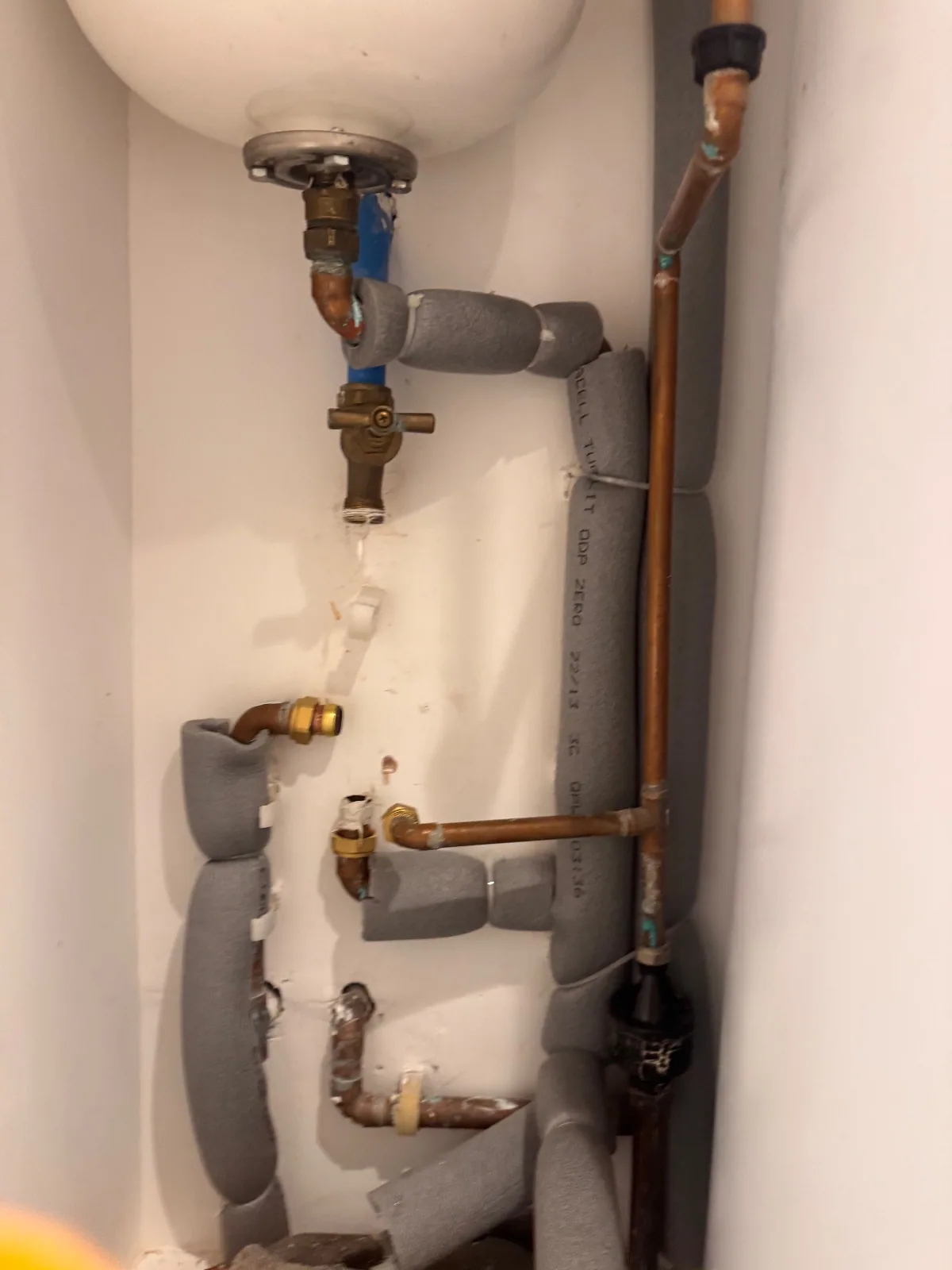
Specify the Telford range and exact model
Telford’s published information covers several product families and arrangements. Its downloads distinguish direct, indirect, solar and heat-pump applications, alongside vented cylinders and other storage products. The product code and technical data therefore matter more than a broad request for a Telford tank.
We identify whether the project is a replacement, an increase in storage or a change in system type. An existing Tempest cylinder does not make every current Tempest model a drop-in replacement. We check its heat source, dimensions, connection positions and protective arrangement before selecting the equipment and agreeing any changes around it.
Match hot-water demand to capacity and recovery
We discuss the busiest use period: consecutive showers, baths, simultaneous taps and the time available between them. Capacity and recovery work together. The selected cylinder’s data must be considered against the actual heat source and intended operating arrangement rather than a litres-per-person shortcut.
If the current installation has become unreliable, we distinguish a failed vessel from a control, immersion or heating-circuit fault. Replacement may still be the chosen project, but its scope should explain what problem it resolves. A larger cylinder does not repair a heat source that cannot perform its intended function or remove a restriction in the water supply.
Select direct, indirect or specialist heating arrangements
A direct electric model relies on its specified immersion heating, while an indirect model receives heat through a suitable coil. Solar and heat-pump variants need their own design checks. Telford’s Tempest indirect solar information, for example, describes a twin-coil arrangement for solar thermal alongside a conventional boiler; that is a specific application, not universal compatibility.
We coordinate the cylinder-side specification with any wider heating or renewable project. Electrical, solar or gas work is identified for the appropriately competent person rather than assumed included in a cylinder fitting. The proposal makes clear which functions are connected now and which future changes would require another assessment.
Check the cupboard, support and working space
The installation survey considers the filled load, route into the property and access for removing old equipment. The cylinder’s height and diameter are only part of the space requirement; valves, immersion covers and serviceable connections also need room. A product that physically fits can still leave maintenance access unsuitable.
Connection differences can require pipework alterations or a different orientation within the space. We agree those changes and any opening-up before work. If cabinets, flooring or a door frame need attention, responsibility for the surrounding work is recorded so the installation does not leave the owner to discover an unexpected finishing task.
Assess supply and the system’s safety design
For an unvented model, we check the incoming water conditions, expected simultaneous use, inlet controls, expansion and safety-discharge route. Existing components are reviewed for the new product and their condition. The presence of an old discharge pipe or vessel does not establish that it is suitable for every replacement.
For a vented arrangement, the feed and open-vent design must be assessed as part of that different system type. We do not turn a vented cylinder into a mains-pressure installation by changing connections. A proposed conversion requires its own complete design, appropriate competence and the relevant building-control arrangements where applicable.
Install, commission and explain the product
We agree the shutdown and sequence around the occupied property, then complete the specified removal, plumbing and coordinated controls work. Unexpected defects discovered when the old equipment is removed are explained before additional work proceeds. The final installation is checked according to the selected model’s requirements.
At handover, we explain normal heating controls, the relevant records and the manufacturer’s servicing requirements. Product warranty terms depend on the actual cylinder and conditions, including any registration or maintenance obligations. We clarify those documents rather than use one advertised warranty headline as a promise covering the complete installation and every component.
Set out the supply and fitting scope
We identify the exact Telford product and the installation changes it requires. Capacity, heat-source arrangement, cupboard access, old-cylinder removal and discharge routing all influence the proposal. Retained valves or controls are distinguished from new components, and any separate electrical or building work is identified so the fitting scope remains clear if you are comparing quotations or supplying the cylinder yourself.
Arrange a Telford installation survey
Send the postcode, existing cylinder and heat-source details, and your reason for the project. Include a proposed model or supplier quotation if you have one, together with any bathroom or occupancy changes. The team can request photographs and plans by email after the written enquiry to prepare for the survey.
Loyal Plumbers works with households, landlords and commercial property teams across London and inside the M25. We set out the cylinder, connections, access and commissioning scope before installation. Where the chosen product is unsuitable for the space or source, we explain the available direction for the project before you commit to equipment.
Common questions
Can a Tempest replace another brand of cylinder?
A suitable model can be considered, but the entire installation must be checked. Heat-source compatibility, connection geometry, supply and safety components determine the work required; the brand change alone does not define the scope.
Can I order using only the old cylinder’s litre capacity?
No. Capacity does not identify the heat-source arrangement, dimensions, coil performance or required controls. Provide the old model and proposed product details so the specification can be reviewed first.
Is the installation the same for vented and unvented models?
No. The supply and safety arrangements differ. We identify the system type and plan the correct connected work rather than treat both as interchangeable storage tanks.
Sources and further reading
Need help with this in London?
Emergency repairs, investigations and planned installations across London and inside the M25. Tell us what you need so we can agree the next step.
Discuss your job