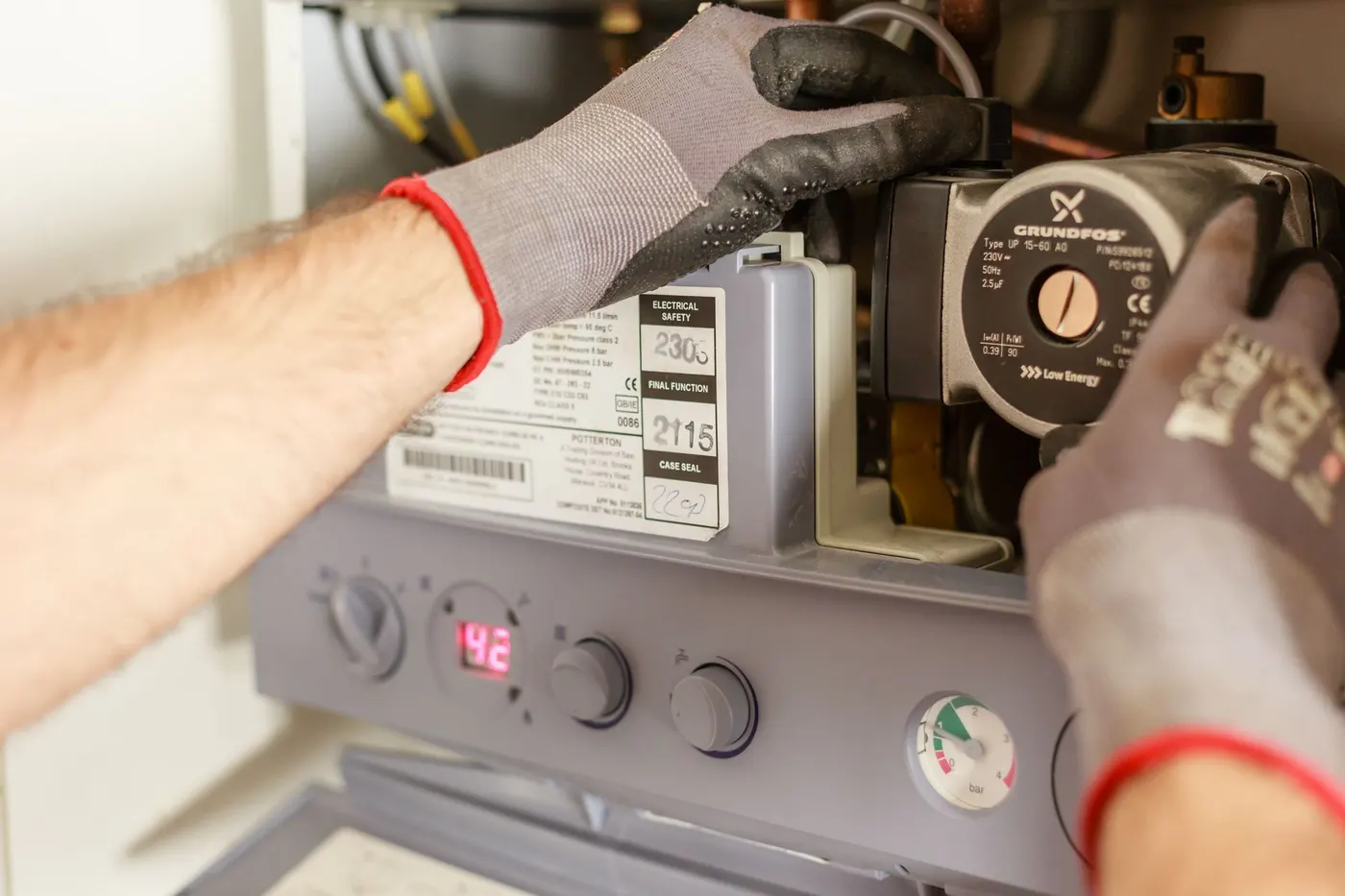
Boiler replacement projects we handle
The installation scope depends on what is changing. Keeping a similar boiler in the same position can retain more of the existing layout, while a move or a change of system introduces new routes and connections. We establish that boundary before specifying equipment.
- Same-position replacement: assess the existing connections, flue, condensate route, controls and retained heating circuit for the selected appliance.
- Boiler relocation: plan new service routes, flue position, maintenance access and the making good needed in both locations.
- Combi installation or conversion: assess on-demand hot water requirements and the supply, alongside removal or alteration of redundant storage equipment.
- System or heat-only boiler replacement: check compatibility with the cylinder, heating distribution and controls that will remain.
- Refurbishment and extension projects: coordinate the heating and hot water design with additional rooms, bathrooms and changing demand.
The survey: heating load and hot water use
We assess the building’s heating requirements and how the existing system serves it. Tell us about cold rooms, troublesome radiators and any planned insulation or extension. These details help separate boiler selection from circulation or radiator work that may be needed alongside it.
Hot water is assessed separately. A standard combi heats water as it is drawn; a boiler-and-cylinder arrangement provides stored hot water with its own recovery requirements. We consider simultaneous showers, baths, incoming supply and available space. The number of bedrooms is useful background, but does not settle the specification.
Flue, condensate and service routes
The proposed position must work for the appliance, flue terminal, condensate drainage and ongoing servicing. We assess the route and access rather than assuming all existing components can be reused. Gas supply requirements must suit the selected appliance and be checked by the appropriately qualified gas professional.
For flats and conversions, flag concealed or shared flues, freeholder-controlled walls and restricted external access. A route through communal areas may need permission. We identify those dependencies in the installation plan, including any access equipment or other building work required.
Controls and preparation of the retained system
We include the controls and system preparation needed for the installation in the proposal. Existing radiators and pipework are assessed for suitability; replacing the boiler does not automatically mean replacing every radiator. Equally, a known leak or circulation problem needs addressing rather than connecting a new appliance and leaving the symptom unresolved.
The condition of the heating water and the selected manufacturer’s requirements inform cleaning, filtration and treatment. Where remedial work is needed, the proposal explains its purpose and scope. This lets you see which tasks install the boiler and which improve or repair the retained system.
From agreed installation to commissioning
Once the equipment and work are agreed, we plan access and the period without heating or hot water. The installation involves removing the old appliance, completing the agreed connections and associated alterations, and setting up the selected controls. Relocations and conversions are planned as those projects, rather than treated as simple exchanges.
Commissioning checks the completed installation against the appliance requirements, including appropriate gas, combustion, control and system checks by the qualified installer. Handover includes the normal control settings, operation and relevant records. Any further decorative or building work is identified in the agreed scope.
Repair advice when replacement is not yet decided
If a breakdown is the reason for the enquiry and the fault is unconfirmed, we can begin with diagnosis. A serviceable component may be worth repairing; recurring faults, obsolete parts or a system that no longer suits the property can change the decision. We explain the repair and replacement paths using the findings. If age is the main worry, our article on how long do boilers last covers the signs that replacement is due.
Pressure loss elsewhere in the heating circuit, a cold radiator or a cylinder-control fault may need work independent of the boiler. Identifying that distinction prevents a replacement project from leaving the original complaint untouched. Our repair-or-replace guide helps you compare the decision in more detail.
Your proposal and installation records
The proposal identifies the selected appliance, controls, pipework, flue and condensate work, system preparation, removal and commissioning. Access openings and making good are agreed separately where required. We discuss changes revealed during the work before extending the scope.
Our Gas Safe registered engineers carry out the gas work within their relevant qualifications. We provide the applicable commissioning and building-regulations records for the agreed installation. Product registration, warranty and servicing terms are confirmed for the actual boiler and arrangement, so you know what paperwork to keep and how to maintain the new installation.
Book a boiler replacement survey
Send your postcode, current boiler details, whether you have a cylinder and the reason for replacing or moving the appliance. Include planned bathrooms or extensions and any access restrictions. Loyal Plumbers has 10 active vans and operates 24/7 throughout London and inside the M25; urgent loss of service and planned installations are scheduled according to the job.
Send written details through the enquiry form. We can arrange to receive photographs or documents by email afterwards; the form does not accept uploads.
Common questions
Can you move the boiler as part of replacement?
Yes, subject to a suitable position and service routes. The survey covers flue, condensate, supply connections, maintenance access and any permissions or making good.
Can the existing radiators stay?
Where they remain suitable and sound, they can be retained. The assessment identifies cleaning, control, balancing or repair work needed for the completed installation.
Can you change a cylinder system to a combi?
We assess whether the available supply and household demand suit a combi, then define the conversion work. A cylinder system can remain the better choice where storage supports the intended use.
What determines the installation cost?
The selected boiler and controls, relocation or conversion work, flue and condensate routes, system preparation and access. These are established in the survey and written scope.
Sources and further reading
Useful guides for this service
Explore all boilers, cylinders and hot water guides →Need help with this in London?
Emergency repairs, investigations and planned installations across London and inside the M25. Tell us what you need so we can agree the next step.
Discuss your job