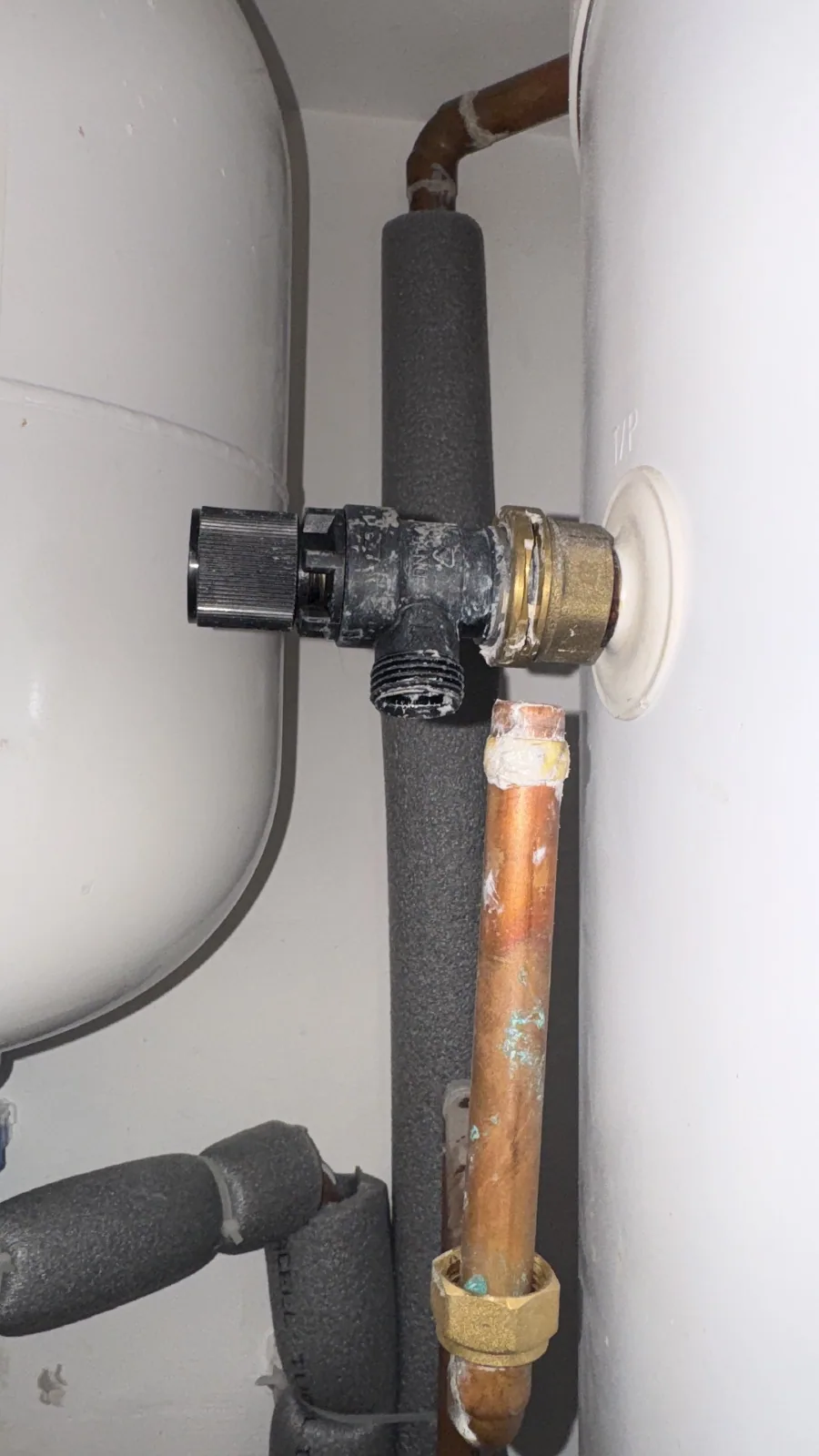
Pressure symptoms need a system diagnosis
Book an assessment for abnormal pressure changes during heating, recurring discharge or pressure loss that has been linked to an expansion problem. Those symptoms do not prove the vessel has failed. We consider the expansion arrangement alongside leaks, safety discharge and related controls before recommending replacement.
Describe whether the issue concerns the boiler heating circuit or stored domestic hot water. A gauge on a boiler and water appearing at a cylinder tundish relate to different parts of an installation. The distinction directs the visit and prevents a component being selected for the wrong circuit. If you are unsure, provide visible equipment labels rather than guess from vessel colour.
Match the vessel to its application
An expansion vessel provides space for water-volume changes as the system heats. Manufacturer ranges distinguish vessels for heating from those intended for potable-water applications. Reflex, for example, identifies separate product families for those uses. The required rating, material suitability and capacity are specified for the actual installation.
We check the existing vessel information and the system it serves. A replacement should not be chosen solely because its external size or threaded connection matches. The installation’s volume, temperature and pressure requirements, manufacturer guidance and available mounting arrangement all affect the selection. A previous incorrect component should not become the template for the new one.
Separate serviceable charge issues from failed components
Professional assessment establishes whether the existing vessel can be maintained or needs replacement. It also considers the connecting route and whether another defect is contributing to the symptoms. We explain the findings and the proposed work before changing a component, rather than automatically replacing every vessel associated with a pressure complaint.
Checking or adjusting a vessel involves the correct isolation and system conditions. It is not a homeowner tyre-pressure test. Do not press the gas valve, attach a pump, drain the system or operate relief valves to investigate. An incorrect procedure can give misleading results and create a water escape or unsafe operating condition.
Plan replacement access and support
Tell us where the vessel is mounted and whether it is inside a boiler, beside a cylinder or in a locked plant area. Internal appliance access changes the competence and repair scope. We assess the removal route, connections and suitable support for the selected replacement, including the load when water is present.
If the original position prevents practical servicing, an alternative arrangement may need consideration where the equipment design permits it. We explain the additional pipework and access implications rather than improvise an unsupported relocation. Work on a gas boiler requires appropriately qualified Gas Safe competence, while unvented-cylinder safety work needs competence for that installation.
Check the connected pressure and discharge functions
Replacing a failed vessel does not automatically resolve every consequence of the original fault. A relief device that has been discharging or another pressure-control component may require assessment. We identify any related defect and agree additional work separately so the repair addresses the actual operating problem.
After the agreed replacement, we check the relevant system response and connections. The handover explains the component installed, the checks completed and any remaining investigation. If pressure continues to change unexpectedly, the next step follows the evidence rather than repeated topping up or another unverified vessel replacement.
Recognise cylinders with a different expansion design
Not every unvented cylinder uses an external expansion vessel. Some Megaflo models use an internal air-gap arrangement. We identify the actual model and its manufacturer requirements before diagnosing an expansion complaint. The absence of an external vessel alone is not proof that a component is missing.
A hot or steaming discharge from an unvented cylinder needs urgent professional attention. Keep clear and stop heating through normal accessible controls only if safe; do not turn off the water supply as a generic overheating response. Do not adjust safety valves or cap discharge pipes. Explain those symptoms when calling rather than request a routine component swap.
Define the vessel and connected work
Replacement cost depends on the application and vessel specification, the condition of the connection, mounting access and the isolation or draining required. We explain whether the existing support and fittings can remain, and identify any separate relief-valve or pressure-control defect. A quotation for a new vessel should address the confirmed pressure problem rather than leave an already identified connected fault unresolved.
Arrange an expansion-system assessment
Send the postcode, appliance or cylinder details and a description of pressure or discharge behaviour. Mention previous vessel work, recurring top-ups and any visible leak. The team can request photographs of accessible labels or records by email after enquiry. Leave components and covers undisturbed while the appointment is arranged.
We support household, landlord and business systems across London and inside the M25. The agreed scope covers diagnosis, the appropriate vessel where required, access and checks after repair. If the findings point to a separate leak, unsuitable system arrangement or another failed component, we explain that next step before extending the job.
Common questions
Can the vessel be recharged instead of replaced?
Sometimes maintenance is appropriate, but condition and professional checks determine that decision. A failed diaphragm, unsuitable vessel or related fault can require another response. Do not attempt a recharge while the system remains in an unknown condition.
Are red and white vessels interchangeable?
Colour is not a reliable specification. The product must be suitable for the circuit, water application, pressure, temperature and capacity requirements. We identify the actual component and its intended use.
Does every Megaflo need an external vessel?
No. Some models accommodate expansion internally. The model instructions determine the arrangement, so diagnosis must identify the cylinder rather than assume that every unvented installation uses the same expansion components.
Sources and further reading
Need help with this in London?
Emergency repairs, investigations and planned installations across London and inside the M25. Tell us what you need so we can agree the next step.
Discuss your job